


In more affluent urban and suburban areas, banks proliferate like bacteria: In cities like New York, there’s seemingly an outpost of a giant bank on every corner. But that doesn’t hold true for the entire country. “Twenty-eight percent of U.S. households are underserved by traditional banks,” writes Katherine Isaac, an organizer with the Campaign for Postal Banking, in an email.
Poorer and more rural areas suffer from a dearth of banks. Without them, nearly 90 million Americans rely on payday lenders, check cashing joints, and even pawn shops to handle traditional, basic banking services. These are people with, often, full-time jobs and no way to actually save money. And these non-bank financial services are very expensive. From an editorial in The New York Times: “The average annual income for an ‘unbanked’ family is $25,500, and about 10 percent of that income, or $2,412, goes to fees and interest for gaining access to credit or other financial services.”
Farmers, who primarily live in rural areas, are hit hard by this problem. “We have absolutely seen a thinning of financial services—banks, in particular traditional banks—throughout the countryside,” says Alicia Harvie, the advocacy and issues director for Farm Aid.
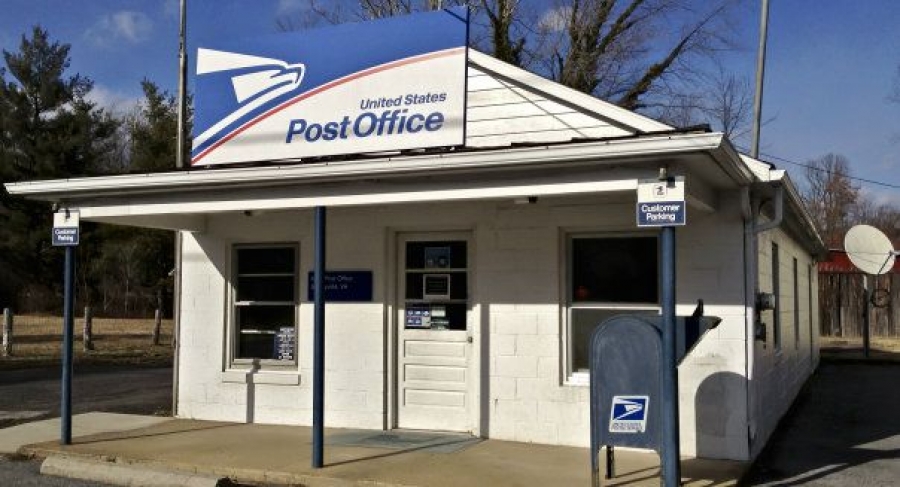
Postal banking is a potential solution. The USPS, notes Isaac, “is the world’s largest retail network,” with more than 30,000 locations. (For comparison, there are just over 5,000 Walmarts and just less than 12,000 Starbucks locations.) The USPS is required to have at least one location in every zip code, and as a public institution, does not have to base its decisions solely on what makes monetary sense. “The Postal Service isn’t in business to make a profit. Its purpose is to serve the American people,” writes Isaac.
The transition to postal banking, if it was to happen, is actually not quite as tricky as it might seem. Here’s what Isaac said when I asked how hard it would be to turn every post office into a bank:
“The USPS can offer numerous financial services without getting a bank charter. It already sells money orders, cashes treasury checks, and conducts international electronic funds remittances. Its employees are trained and certified under the Bank Security Act. The USPS can expand on these services to, for example, cash payroll checks, install surcharge-free ATMs, and provide bill pay and electronic funds transfer. There is an EFT [electric funds transfer] system run by the United Nation Universal Postal Union that the USPS could adopt at little cost.”
Proponents of postal banking just want a simple, widespread, low-cost way to handle the basics: check cashing, savings accountings, transfers, some small loans. And those are invaluable for farmers, who often, due to the volatility and frankly not entirely profitable nature of their business, often find it extremely difficult to secure loans. But just because Chase or Wells Fargo or Bank of America doesn’t think a farmer should get a loan doesn’t mean the farmer shouldn’t get the loan, so why not put some of that power in a public institution that can support the agricultural industry?
The big problem in getting this off the ground is regulatory; big bankers don’t really care about postal banking, because they’re not going after lower-income or rural customers anyway, but the Independent Community Bankers of America is not thrilled about it. And the banking lobby is fantastically powerful; if they did decide to throw their weight in opposition to postal banking, it’d have no chance, regardless of the support of visible politicians like Elizabeth Warren and Bernie Sanders.
The other obvious benefit, besides providing much-needed financial services: This could save the post office system. Not only would postal banking require that all the post offices stay open, but it’d actually create new jobs. And, of course, there’s precedent: Postal banking systems are already in effect from India to New Zealand to France. Oh, and we’ve done it before here in the USA, from 1911 to 1967.
Link to original article from Modern Farmer
 Imagine going to the polls on Election Day and discovering that your ballot could be collected and reviewed by the
 ACLU Blueprints Offer Vision to Cut US Incarceration Rate in Half by Prioritizing 'People Over Prisons'
  "These disasters drag into the light exactly who is already being thrown away," notes Naomi Klein
  How about some good news? Kansas Democratic Representative advances bill for Native Peoples.
  What mattered was that he showed up — that he put himself in front of the people whose opinions on
 On a night of Democratic victories, one of the most significant wins came in Virginia, where the party held onto
 A seismic political battle that could send shockwaves all the way to the White House was launched last week in
 In an interview with Reuters conducted a month after he took office, Donald Trump asserted that the U.S. had “fallen
 Attorney General Jeff Sessions overturned the sweeping criminal charging policy of former attorney general Eric H. Holder Jr. and directed