

In a May 29 op-ed in The Washington Post, Whitehouse argued that the fossil fuel industry’s efforts to discredit climate science and attack environmentalists may constitute deliberate deception of the kind the tobacco industry perpetrated in previous decades. In 2006, a federal judge found the tobacco industry guilty of fraud in a civil lawsuit brought under the Racketeer Influenced and Corrupt Organizations Act (RICO). Cigarette companies' efforts to hide the health effects of tobacco consumption included lying about the findings of their own studies on smoking.
Fossil fuel companies may be a ripe target for a civil lawsuit under RICO as well, Whitehouse wrote. The industry coordinates with conservative think tanks to disseminate industry-funded research contradicting the scientific consensus on man-made climate change. The use of think tanks may be “designed to obscure” the industry's own role and to lend intellectual credibility to otherwise unfounded scientific claims, Whitehouse wrote. And the industry’s direct funding of climate-denying scientists like Harvard’s Willie Soon could be evidence that it may be trying to buy favorable climate science.
Although Whitehouse conceded that the information currently available does not definitively prove that the fossil fuel industry is “engaged in the same kind of racketeering activity as the tobacco industry,” litigation would shed more light on the matter -- as it did in the case against tobacco. “Civil discovery would reveal whether and to what extent the fossil fuel industry has crossed [the] same line” as the tobacco industry, he wrote.
But a RICO case against the fossil fuel industries would face an uphill climb, Jeffrey Grell, an expert in RICO law and former assistant attorney general of Minnesota, told The Huffington Post.
First, the case would have to prove “intent to defraud” by showing that climate-denying scientists were lying about what they actually believed.
"It is hard to prosecute people for having an erroneous or stupid opinion," Grell said. “You could say that X percentage of the scientists disagree with them and there is empirical data they are lying about."
Demonstrating a financial conflict of interest among climate-change researchers who take industry funding could contribute to a case showing fraud was committed, but is not in itself evidence of fraud, he said.
Grell also raised the question of whether the government would have standing to sue the fossil fuel industry. In the case of tobacco, the government was able to argue that the tobacco companies’ deception had harmed its administration of Medicare and Medicaid. Such standing might be harder to claim against energy companies, Grell said.
Mark Hemingway, a writer for the conservative Weekly Standard, criticized Whitehouse’s analogy between the fossil fuels and tobacco industries, claiming that the scientific community is not as unanimous about the effects of climate change as it is about tobacco.
“Even among those who do agree that global warming is a problem, there's a tremendously wide variety of opinions about the practical effects,” Hemingway wrote.
Link to original article The Huffington Post


 Imagine going to the polls on Election Day and discovering that your ballot could be collected and reviewed by the
 ACLU Blueprints Offer Vision to Cut US Incarceration Rate in Half by Prioritizing 'People Over Prisons'
  "These disasters drag into the light exactly who is already being thrown away," notes Naomi Klein
  How about some good news? Kansas Democratic Representative advances bill for Native Peoples.
  What mattered was that he showed up — that he put himself in front of the people whose opinions on
 On a night of Democratic victories, one of the most significant wins came in Virginia, where the party held onto
 A seismic political battle that could send shockwaves all the way to the White House was launched last week in
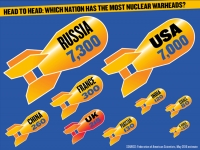 In an interview with Reuters conducted a month after he took office, Donald Trump asserted that the U.S. had “fallen
 Attorney General Jeff Sessions overturned the sweeping criminal charging policy of former attorney general Eric H. Holder Jr. and directed
 Why did Democrats lose on election night? Because not enough of them were fighting for big ideas. As Sen. Bernie
 Most Americans want better benefits, and they agree on how to pay for them. As strengthening Social Security becomes a